Exclusive Interview: Billick and Smith Give The Tactical Blueprint for Super Bowl Sunday
Andy Whiteoak • Digital PR Specialist20+ years betting experience
Updated:
Feb 8, 2026 , 07:17 AM ET
• 4 min read
Two Super Bowl–winning coaches reveal the real Xs and Os behind Seattle vs New England and the tactical traps that could decide Super Bowl LX before the first snap.
Photo By - Covers.com
We think we know what we’re watching on Sundays.
We see a touchdown, we cheer. We see a sack or an interception, we groan.
To understand the real Xs and Os that will define Super Bowl LX, we stopped guessing and started asking.
Speaking exclusively to Covers.com earlier this week were Brian Billick, the offensive genius who coached the Baltimore Ravens to a Super Bowl XXXV victory, and defensive maestro Mike Smith, the winningest head coach in Atlanta Falcons history.
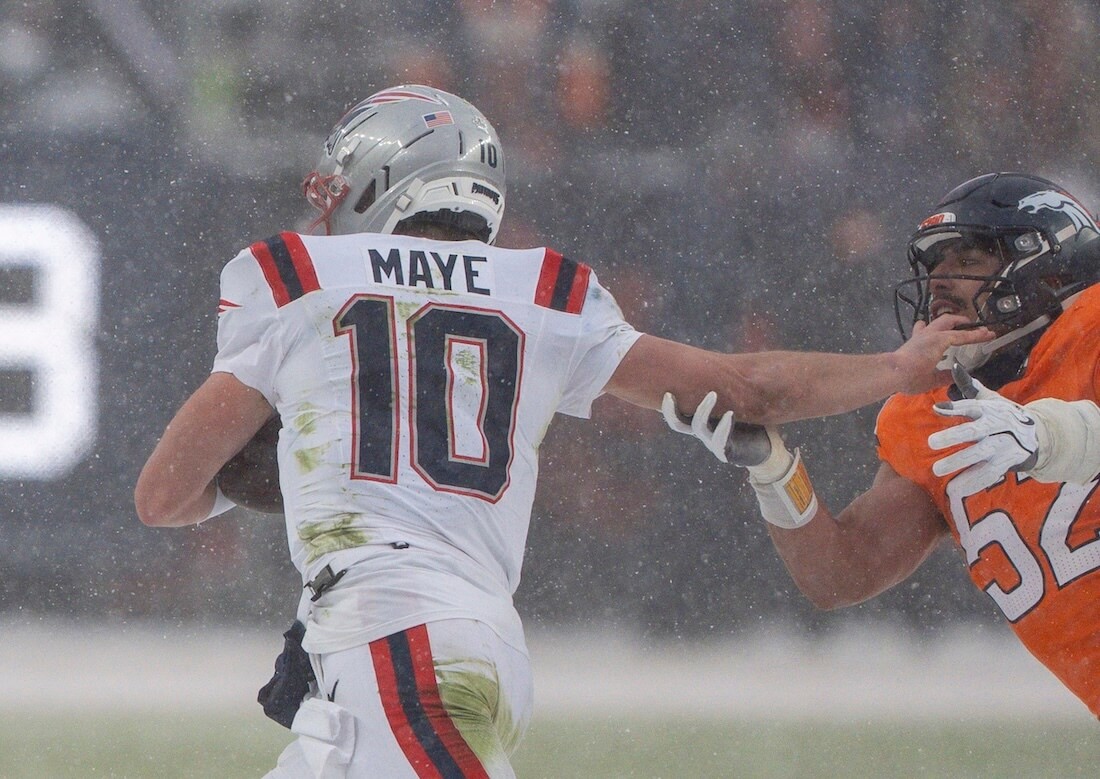
Derek Regensburger/Cal Sport Media/Sipa USA via Reuters Connect
If you think Drake Maye is just going to drop back and "play his game" you haven’t seen Mike Macdonald’s defense. The Seattle Seahawks head coach isn’t just playing defense; he’s playing 4D chess on a shoots-and-ladders board.
According to Defensive mastermind Mike Smith, the Seattle scheme is designed to turn a quarterback's brain into scrambled egg before the ball even moves.
"He comes out of a split safety, middle of the field, open 2-4-6 look... But then he wants to make that his disguise, and when the ball snaps, he wants to rotate... He doesn't want to give any tells to the offensive coordinator or the quarterback prior to the snap."
- Mike Smith
The issue for a rookie like Maye isn’t physical. It’s processing speed. Smith notes that Macdonald steals the one thing a young QB needs most: time.
"Now the quarterback's not thinking in two seconds to get it. He's thinking in milliseconds.”
So, how do you coach a sophomore QB to throw on a defense that changes shape like a kaleidoscope? You don’t let him think.
Brian Billick is adamant that if the New England Patriots ask Drake Maye to decipher the defense pre-snap, they’ve already lost.
"If you're going to ask Drake Maye to go in and recognize pre-snap what's going on and make adjustments, that's going to be a mistake. You need to create your offense with a lot of called-and-run... You're not going to go from reading one to two to three; if you do, you're going to get sacked."
- Brian Billick
Coach Smith agrees. The danger isn’t just a sack; it’s the bait-and-switch. If Maye holds the ball looking for a second option, Seattle closes the trap.
"Macdonald and that system… they can force the quarterback into mistakes very, very easily if he doesn't get it out on his first and his second read because if he holds it, they're gonna have some kind of trap coverage."
- Mike Smith
But Billick sees a glimmer of hope. Maye has legs. In a rigid chess match, the piece that moves unpredictably is dangerous.
"He can do that naked boot like we saw against Denver at the key times... It's that kind of improvisation within the body of the call that Josh McDaniel is going to make that's going to be key... because I don't know how many times that open look is going to present itself."
- Brian Billick
The Myth of "The Script"
We hear it every broadcast: "They’re on their scripted plays!"
We picture a coach reading a list from 1 to 15 like a robot. Billick, a disciple of the legendary Bill Walsh (the father of the script), says that’s nonsense. It’s not a to-do list; it’s a science experiment.
"The 15 openers... it really is just a way of probing. 'Okay, we're going to get into these formations. We're going to run these plays and see how you react.' ... It isn't just the first 15 plays sequentially."
- Brian Billick
It’s about situational comfort. Billick explains that the "script" is actually a menu of openers for specific scenarios.
"What your 15 openers are is: What are my opening plays on first down? What are my opening plays on an earned first down? ... What's going to be my first shot to the end zone on the 40 yard line going in? So the players know, here's the opening first down etc... The players have a real confidence."
- Brian Billick
Smith backs this up. The media loves the idea of a rigid script, but football is too fluid for that.
"It's not the first 10. It's these situations that arise. And when they come, the players basically know what you're going to call because we've talked about it... The media takes it way further... A guy's got 20 plays and he's going to just go right down his call sheet? He still has to go through the process of what the situation is."
- Mike Smith
The Sam Darnold Dilemma
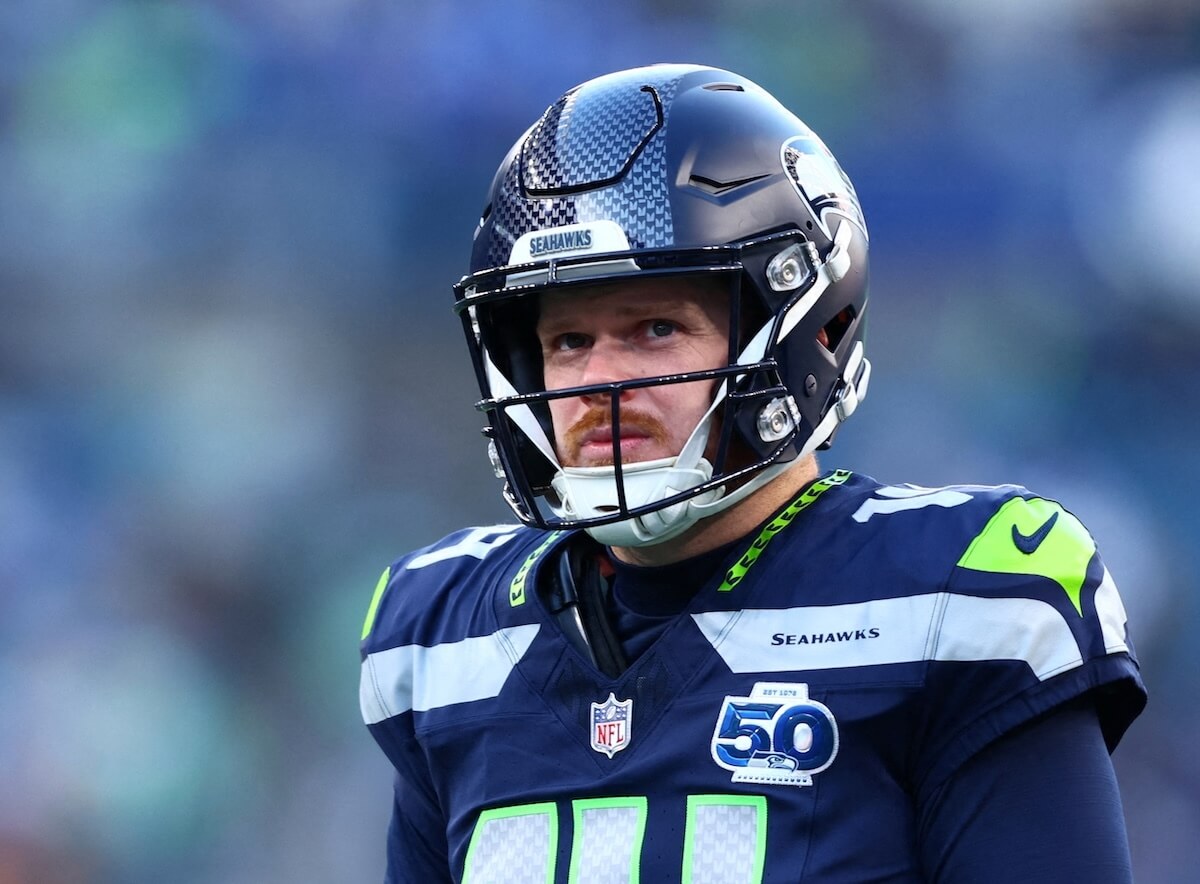
IMAGN IMAGES via Reuters Connect
Sam Darnold has the arm. He has the weapons. But he also has the history.
Billick has a name for the metric that decides these games. It’s not QBR or EPA. It’s "Toxic Differential."
"99.9% of the games in this league are dictated by what I call ‘toxic differential’. Turnovers and big plays. It can't be a matter of just getting big plays, because you can't give up big plays. The only thing you can look at was Sam Darnold has turned the ball over a little bit."
- Brian Billick
So how do you coach a guy with a turnover habit before the biggest game of his life?
Smith says you ignore the elephant in the room.
"I try not to talk to the quarterbacks about turnovers. You know, I don't want him thinking that I'm concerned about him turning the ball over... We want him to go through his reads and do the things that... he needs to do."
- Mike Smith
Billick takes a slightly different approach. He believes in positive reinforcement — showing Darnold that he’s already beaten this specific coverage before.
"I would look at where the big plays came from New England... and then you'll find like throws and reads by Sam from previous games... And now I'm going to say, 'Okay, look, this is what has hurt them. And you have done this.' ... The key is to recognize when those times present themselves. Don't hold the ball. Don't force it in."
- Brian Billick
Sending a Telegram
Finally, how does Seattle make life easy for Darnold?
They force New England to show their hand.
Smith explains that the run game isn't just about yards; it’s about information. If Seattle hammers the run game, New England has to bring an eighth man into the box.
And when they do that, they’re telling Darnold exactly where to throw.
"You want to run the football if you're Seattle to get the box a little heavier... If they can effectively run it, they're going to be able to get an extra man closer to the line of scrimmage... Line up in that eight man front and basically that's going to send a telegram to the quarterback to have an opportunity to take that shot down the field."
- Mike Smith
The Verdict
So, who lifts the Lombardi Trophy?
When you ask two men who won a Super Bowl with a suffocating defense, you shouldn’t be surprised by the answer. Brian Billick is taking the points, and the defense.
"Seattle is giving up four and a half. I think that's about right... I think I'm gonna go with Seattle... A fairly low scoring game... like a 17-14, 21-17 game."
- Brian Billick
Mike Smith agrees: offense sells tickets, but defense wins the ones that matter.
"Yeah, I've got to go with the defense. I think that's the adage of playing in the playoffs, the best defenses usually win."
- Mike Smith
Want more insights from Billick and Smith?
In the first half of our interview Brian Billick and Mike Smith give us their take on the 'new' Patriot Way under Mike Vrabel, the future of the game with AI, and the low-key players who could win their team the Super Bowl. Read their Seahawks vs Patriots insights now!
Brian Billick and Mike Smith were speaking exclusively with Andy Whiteoak of Covers.com. All quotes in this article are taken from an exclusive interview conducted by Covers.com. Journalists and media outlets are welcome to use these quotes, provided they are attributed to Covers.com. Please ensure links back to the original article to provide full context for readers.
Andy is a sports writer and content creator who brings a unique "coaches' eye" and a unique personality to the world of sports betting. Based in the UK, he spent 15 years as one of the country's top American football coaches.
This hands-on experience on the sideline gives him a distinct advantage in breaking down performance data and analytics, allowing him to see the game through a lens that goes beyond the box score.
Though football is his primary passion, Andy’s expertise extends to College Basketball, the NBA, and MLB. Right now he has turned his focus to emerging prediction markets and popular culture betting.
With a degree in Film and Media, he has a rich background in digital communication and marketing, which he uses to create intelligent, data-driven content that is both entertaining and informative.
His work has been quoted in major publications such as Axios, Bloomberg, Sports Illustrated, and Newsweek, cementing his status as a trusted voice in the industry. Andy’s analytical approach to betting mirrors his content creation: he prioritizes well-supported perspectives and rigorous research to find the edge that others might miss.
If you choose to make use of any information on this website including online sports betting services from any websites that may be featured on
this website, we strongly recommend that you carefully check your local laws before doing so.It is your sole responsibility to understand your local laws and observe them strictly.Covers does not provide
any advice or guidance as to the legality of online sports betting or other online gambling activities within your jurisdiction and you are responsible for complying with laws that are applicable to you in
your relevant locality.Covers disclaims all liability associated with your use of this website and use of any information contained on it.As a condition of using this website, you agree to hold the owner
of this website harmless from any claims arising from your use of any services on any third party website that may be featured by Covers.