What are Kalshi Perpetual Markets?
Kalshi Perpetual Markets are perpetual futures contracts. That may sound technical, but the basic idea is straightforward.
A perpetual future lets you trade the price direction of an asset without owning it. In Kalshi’s case, the first major use case is crypto. So instead of buying Bitcoin, Ethereum, Solana, or another crypto asset, you can take a position on whether its price will rise or fall.
If you think Bitcoin is going up, you go long. If you think Bitcoin is going down, you go short.
No actual Bitcoin lands in your wallet. You don’t need to think about cold storage, gas fees, or whether you wrote down your recovery phrase on the back of an old envelope and then threw it away. You’re trading a contract tied to price movement.
To go deeper: perpetual futures use leverage, margin, funding rates, and liquidation rules. Those features make perps powerful, but also risky. They’re not the same as buying crypto. They’re not the same as trading a standard “yes/no” Kalshi prediction market.
Perps can move fast, and sometimes very fast.
Why are they called “perpetual” futures?
Traditional futures contracts expire. A futures contract usually has a settlement date, which means the trade is tied to a specific moment on the calendar.
Perpetual futures don’t have that fixed end date. You can hold a perp position as long as your collateral supports it. You open the trade, manage it, and close it when you choose, unless the market moves against you far enough that liquidation kicks in first.
That “no expiry” feature is why perps became so popular in crypto. Crypto trades 24/7. It doesn’t sleep, it doesn’t close for holidays, and it doesn’t care that you were just trying to enjoy a Sunday afternoon. Perps let traders hold directional exposure without rolling contracts from one expiration date to the next.
Kalshi perps vs. Kalshi prediction markets
| Feature | Kalshi Perpetual Futures | Kalshi Prediction Markets |
|---|---|---|
| What you trade | Crypto price direction | Outcome of a real-world event |
| Example | BTC price goes up or down | Will a candidate win an election? |
| Expiration | No fixed expiry | Resolves on a specific outcome/date |
| Leverage | Yes | No |
| Main risk | Leverage losses/liquidation | Contract revolves against your position |
| Best for | Crypto price exposure | Event-based forecasting |
 Key difference vs. prediction markets
Here’s the simple split:
- Kalshi prediction markets are about outcomes.
- Kalshi perps are about price movement.
Both are markets that can attract sharp traders. Both can punish lazy assumptions. But they are not the same thing.
Why is Kalshi offering Perps?
Kalshi built its brand around event contracts. That means traders can take positions on real-world outcomes: will this happen, yes or no?
Perpetual futures are not event contracts in the same clean way. They’re price-direction contracts. Still, the overlap is pretty clear.
Prediction market users already understand a core idea: markets can turn opinions into prices. A contract price is not just a number. It’s a crowd’s argument, compressed into a tradable signal.
Crypto perps work differently, but they speak a similar language. Traders bring a view. The market gives that view a price. Then the trader is right, wrong, early, late, overleveraged, underhedged, or lucky. Often several of those at once.
Kalshi is likely offering perps because they sit near the center of three trends:
- Prediction markets are becoming more mainstream. More people are getting comfortable trading outcomes instead of just reading polls, watching odds, or arguing online.
- Crypto remains one of the most active speculative markets in the world. Bitcoin and other digital assets create constant demand for price exposure.
- Regulated U.S. access matters. A platform that can offer event contracts and crypto perps under one roof has a cleaner story for users who want market access without wandering into offshore territory.
That’s the business case. The user case is even simpler: Kalshi wants to be a broader trading venue for people who like markets tied to real-world outcomes and real-time price moves.
How to trade Kalshi perpetual futures
Kalshi perpetual futures can sound intimidating at first. The words are very finance-y. But the basic process is pretty straightforward: pick a market, decide whether you think the price is going up or down, choose how much exposure you want, then manage the position.
Here’s a step-by-step guide to the process:
Choose a crypto market
The first step is picking which crypto asset you want to trade.
Kalshi has offered perpetual futures tied to major cryptocurrencies such as:
- Bitcoin
- Ethereum
- Solana
- XRP
- Dogecoin
- Chainlink
- Litecoin
That list may change over time, so users should always check Kalshi for the current market lineup before signing up or placing a trade. Available assets, leverage limits, margin rules, and contract details can change as Kalshi adds or adjusts markets.
The key point is this: you’re choosing a market based on a crypto asset’s price movement. If you select Bitcoin, for example, your trade is tied to Bitcoin’s price. If you select Ethereum, your trade is tied to Ethereum’s price.
Choose long or short
Once you pick a market, you need to choose your direction.
This is where perps can feel a little different from buying crypto. With spot crypto, most beginners think one way: buy the coin and hope the price goes up. Perps, however, let you trade both sides.
- If you think the price will rise, you go long.
- If you think the price will fall, you go short.
Say Bitcoin is trading at $100,000, and you think it’s headed higher. You could open a long Bitcoin perpetual futures position. If Bitcoin rises, your position should gain value. If Bitcoin falls, your position loses value.
Now flip it: say you think Bitcoin is overheated and due for a pullback. You could open a short position. If Bitcoin falls, your position should gain value. If Bitcoin rises, your position loses value.
Choose your position size and leverage
After choosing long or short, you decide how large your position should be. This is where margin and leverage come into play.
Margin is the money you put up to support the trade.
Leverage lets you control a larger position than the amount of margin you post.
For example, say you use $100 of margin with 3x leverage. That means you control a $300 position.
If the asset moves 5%, your position moves based on the $300 exposure, not just the $100 you posted. So the effect on your margin is much bigger than it would be without leverage.
Monitor funding rates
Perpetual futures do not expire. That is what makes them “perpetual.”
A normal futures contract has an expiration date. A perp does not. You can keep the position open as long as you meet the margin requirements and choose to hold it.
But because perps do not expire, they need a mechanism to keep the contract price close to the underlying asset’s market price. That mechanism is called the funding rate.
Funding is a recurring payment between traders on opposite sides of the market. Depending on market conditions, longs may pay shorts, or shorts may pay longs.
Close or manage the position
Once your trade is open, you are not locked in forever. You can close the position manually when you want to exit.
Maybe your trade worked, and you want to take profit. Or, maybe the market moved against you, and you want to cut the loss. Markets are noisy, crypto is extra noisy, and sometimes the smartest trade is admitting the first idea was wrong.
Kalshi may also offer risk-management tools such as stop-loss and take-profit orders.
- A stop-loss can help limit losses by closing a position if the market moves against you.
- A take-profit can help lock in gains by closing a position if the market reaches your target.
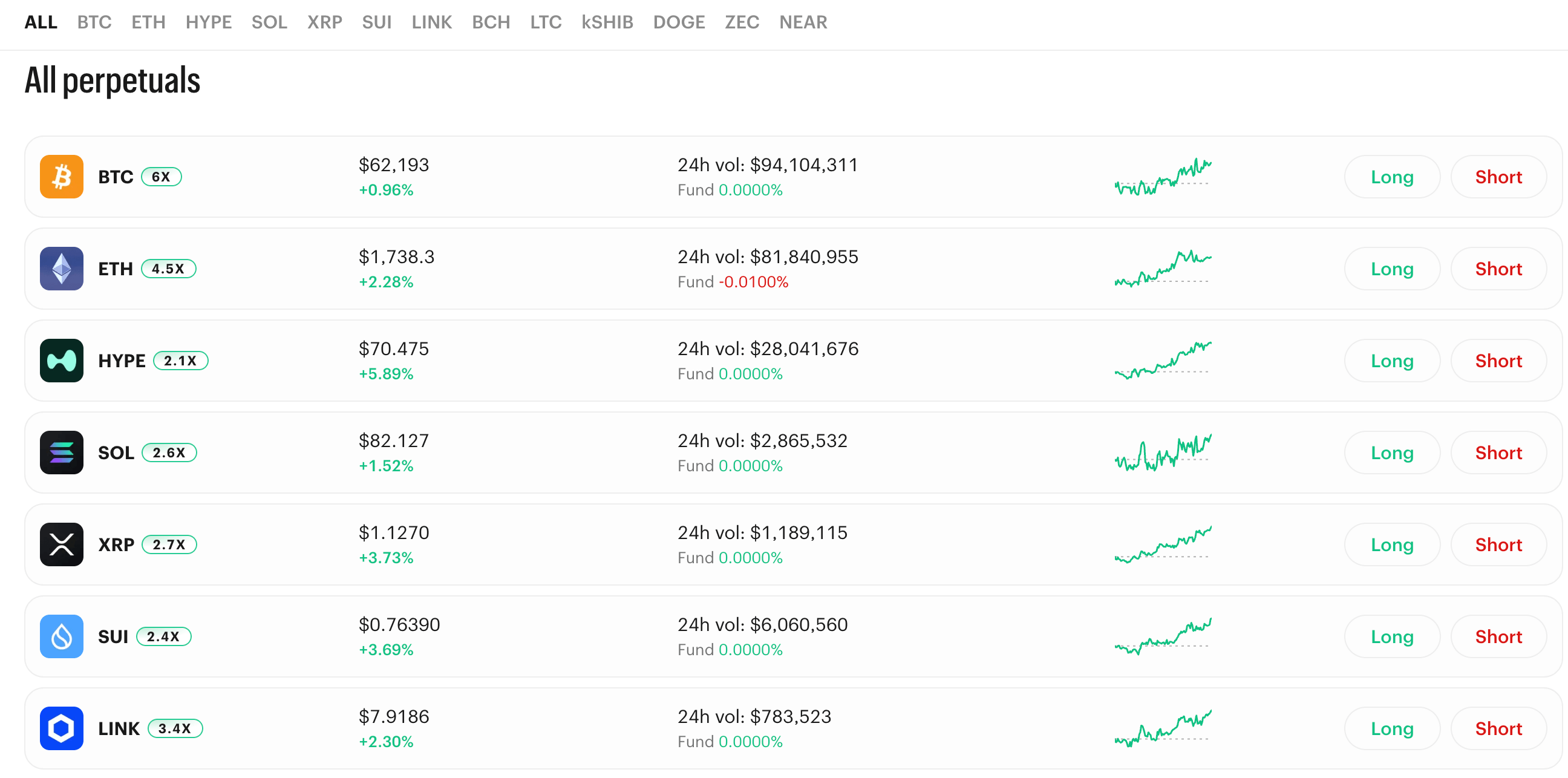
What to expect from Kalshi Perpetual Markets
Kalshi announced its first CFTC-regulated perpetual futures contract in 2026, starting with Bitcoin, and later said perpetual futures were open to eligible users with no waitlist required. That means this is no longer just a “coming soon” product, but access may still depend on eligibility, account setup, and Kalshi’s margin requirements.
The important thing for beginners: perps are not simply another prediction market category within your regular Kalshi balance. Kalshi says perpetual futures are offered through a separate margin account, which means users may need to complete an additional application or setup process before trading.
Kalshi has also signaled that perps are part of a bigger expansion beyond classic event contracts. That’s the interesting part. Prediction markets ask, “Will this happen?” Perps ask, “Where is this asset price going?”
Is Kalshi perps still waitlist-only?
Kalshi perpetual futures are live for eligible users, but access is not automatic. Users must apply for a separate perpetual margin account before trading. In some cases, a Kalshi perpetual futures early-access invite code will remove the need for a waitlist.
Kalshi perps vs. buying crypto
| Feature | Buying crypto | Trading Kalshi Perps |
|---|---|---|
| Own the asset | Yes | No |
| Can profit if price falls? | Not directly | Yes, by going short |
| Uses leverage? | Usually no | No fixed expiry |
| Funding costs | No | Yes, depending on market conditions |
| Liquidation risk | No | Yes |
Buying crypto means owning the asset. If you buy Bitcoin, you own Bitcoin. You can move it, hold it, sell it, or forget about it until the next Thanksgiving argument about whether it’s money, tech, or just a chart with better branding.
Trading perps means you do not own the asset. You own a position tied to its price.
That gives you more flexibility. You can go long or short. You can use leverage. You may need less upfront capital to get exposure.
But you also take on risks that spot buyers do not face, including funding costs and liquidation. That’s the trade-off.
- Crypto is ownership
- Perps are exposure
That’s the cleanest way to think about it.
Who are Kalshi perpetual markets for?
Kalshi perps may appeal to users who already understand markets, price movement, and risk. That includes prediction market users who want exposure to crypto without using an offshore exchange or directly holding tokens.
They may be a fit for people who:
- Understand long and short trading
- Know how leverage changes risk
- Can track funding costs
- Have a clear exit plan
- Are comfortable with crypto volatility
They are probably not a fit for someone who wants a simple, low-stress first trading experience. If a user still feels fuzzy on margin and liquidation, that’s not a small gap. That’s the whole machine.
Here’s what you need to remember: Perps are tools. Tools can both help and hurt. It depends on how they’re handled.
Beginner tips before trading Kalshi perps
Before placing a perp trade, slow down and check a few things.
- Do you understand what asset the contract tracks?
- Do you know whether you’re long or short?
- Do you know your leverage?
- Do you know what price could put your position near liquidation?
- Do you understand how funding may affect the trade if you hold it?
A beginner does not need to become a professional derivatives trader overnight. But the basics matter. The market will not pause because you misread the interface.
Start small. Read the contract details. Watch how prices move. Treat the first few trades as education, not a personality test.
Prediction market news